The first phase of the
great, big Indian elections is taking place in Assam today. While the country is
gearing up for these elections, one common thread that lies between both the United
Progressive Alliance (UPA) and the National Democratic Alliance (NDA) is the
role that women play in these elections.
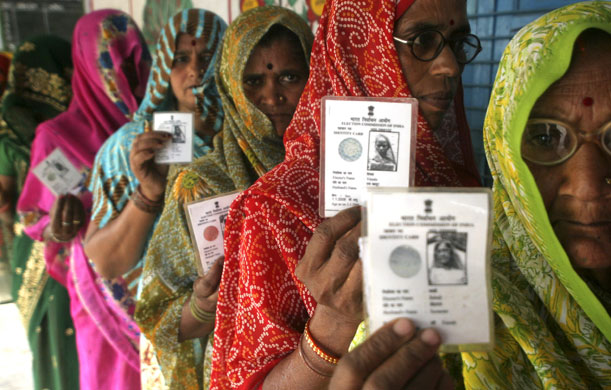
According to reports women
make up 48.5% of the electorate and the country is expected to witness a
greater turnout of women voters than men. These elections will prove important
to women and their empowerment in the future.
Political parties are making
various fleeting promises to women in order to win their vote. These promises
range from free pressure cookers, free gas connections, free electricity, women’s
safety and the promise of jobs. The safety of women has become especially
important ever since the gang rape of a young girl in Delhi in December 2012.
From these promises alone it
becomes obvious that our traditional outlook towards women still remains as one
of a women in her home and in the kitchen. Nevertheless, the power of a woman
in her own home is often misunderstood and downplayed.
Despite promises of free
pressure cookers and the general “empowerment” of women, it is important to
change women’s mindsets towards these elections. Women are to a large extent
decision makers in their houses. They may not necessarily be the bread-winners
but they do have control over money and the spending of money. They look after
their children and are the sole decision makers in terms of controlling their
children’s lives – when do they go to school, how much nutrition must they eat
and what medication they get. In these terms, it is important to shape the
minds of women and educate them so that the country can witness their
widespread participation in these elections.
The number of women
candidates and the voter turnout that we are witnessing today is already an
indicator towards women empowerment. It is a positive sign. ICT too can help in
spreading awareness and the benefits of voting and what women can and cannot
achieve through these democratic elections.
Bibliography

No comments:
Post a Comment